

In this deep dive into technologies crucial for a transition to a sustainable economy, we focus on the role of smart grids and Schneider Electric’s investments in this technology.
Smart grids are crucial for transitioning to a sustainable economy and addressing climate change. These advanced electrical networks use digital technologies to optimize energy distribution, integrate renewable sources and enhance grid reliability. By enabling real-time monitoring and control, smart grids can reduce peak energy demands and improve overall efficiency. Smart grids also facilitate the integration of distributed energy resources (DERs) like rooftop solar and electric vehicles, empowering consumers to become active participants in the energy market. This decentralization improves grid resilience and reduces transmission losses.
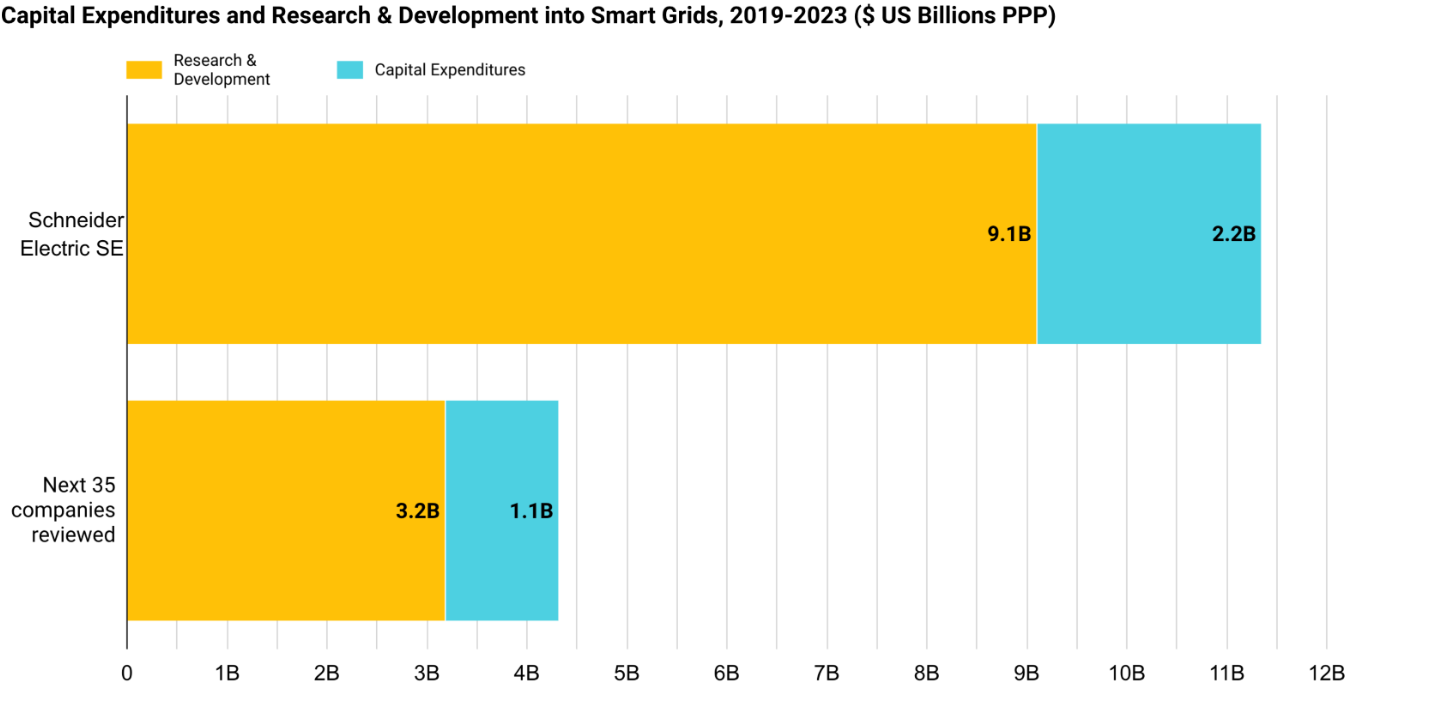
Schneider Electric has positioned itself as a leader in smart grid technology, investing more than US$10 billion between 2019 and 2023, with US$9.1 billion dedicated to R&D. Schneider’s EcoStruxure Microgrid Flex platform exemplifies its innovation-driven approach, standardizing microgrid components and reducing deployment times from years to months. This enables businesses to efficiently integrate renewable-energy sources while minimizing greenhouse gas emissions.
In 2023, Schneider Electric’s R&D efforts focused on creating scalable, interoperable platforms that integrate connected products; edge control systems; and advanced analytics to optimize energy use and improve grid resilience. Its investments fuelled advancements in IoT-enabled technologies, microgrid solutions and smart building systems. These initiatives demonstrate Schneider’s commitment to accelerating the clean energy transition, solidifying its position as a key player in the smart grid revolution.
To learn more about interesting sustainable trends from the Corporate Knights Database, please fill out our contact form or reach out to research@corporateknights.com.